Day 18 · The Law of Positivity · The Adventure CEO
Cheerful in the Forge
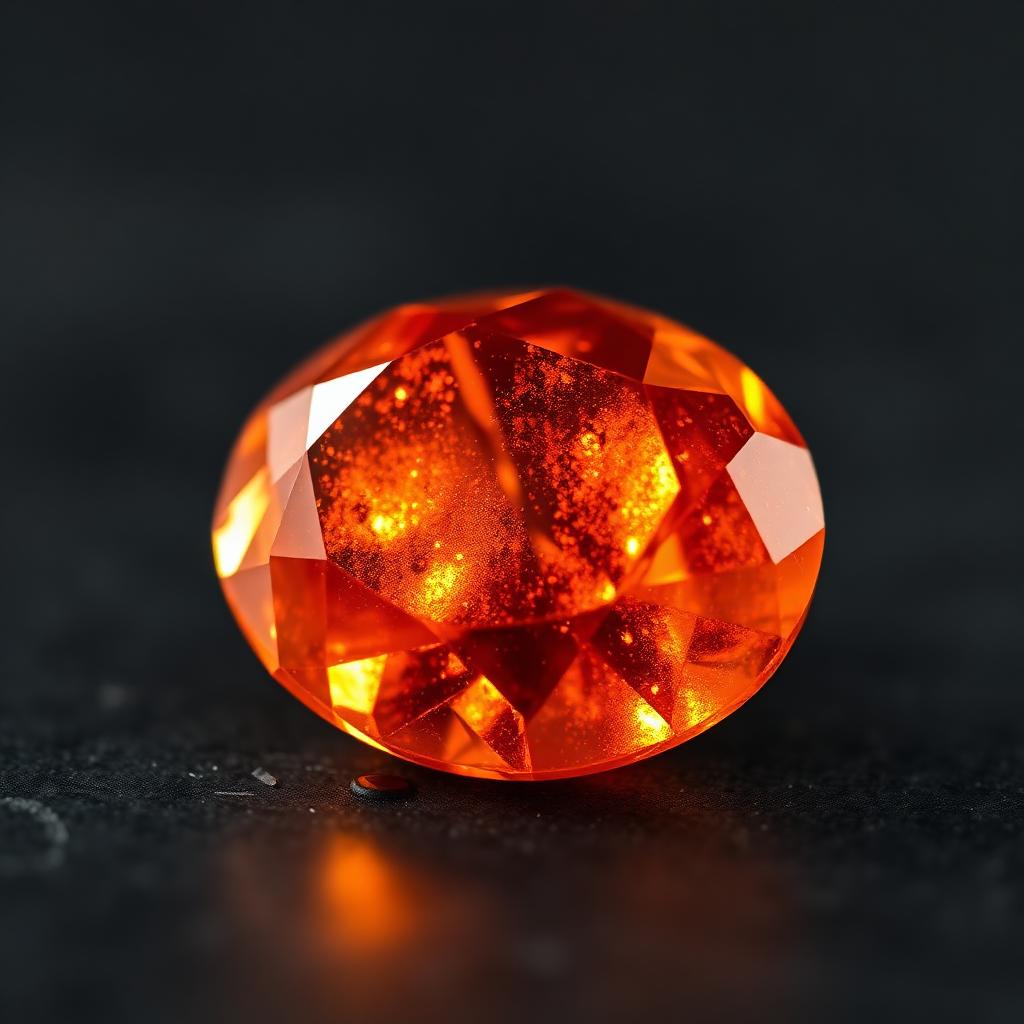
She comes in by the C word — the attribute, the virtue, WHO she is. He comes in by the O word — the office and the resources, WHAT he is. Same stone. This is Sunstone handed to a man.
The temper of the stone· Mohs 6
Hard stone — the sharpening rule
At six to seven and a half the stone begins to give orders. Quartz-grade material is what a Viking honed steel against: the seax, the axe, the plough iron. A stone this hard does not take the shape of the blade — the blade takes the shape of the stone. That is the whole doctrine of an office. The office corrects the man; the man does not bend the office.
The Viking hand
What a Norseman would do with Sunstone
A Viking did not wear Sunstone for its meaning — he used it. the sharpening rule: the stone went into the hand before it went into the story. Feldspar with copper platelet inclusions.
He carried it because it did something a man in an office must do. Schiller — metallic flashes from aligned copper flakes A resource is judged by what it holds up under, and this one holds up as cheerful holds up: Copper caught mid-sparkle — a gladness that throws light back at whoever looks.
On the ship it would have been kept with the scales, the whetstone and the silver — the three things that decide whether a voyage was raiding or trade. Sunstone belongs with the tools of optimism, not with the ornaments.
Righteousness
What the stone signifies for a straight man
Righteousness is not softness; it is straightness. Sunstone is the straight edge of The Law of Positivity: the thing a man measures his own work against when nobody is watching him do it.
He holds the office of Optimism. An office is a straight line drawn around a man's power so that his strength lands on the people he loves rather than on them. Cheerful is what keeps the line where it was drawn.
To be righteous with this stone is to expect without shifting the boundary — to be the same man in the field, at the table and at the door.
Why he chases it
Why a man goes after cheerful at all
He chases cheerful because an office without it is only force. A man can hold optimism for a season on strength alone; he keeps it only if the virtue underneath is real.
A man comes at life from the WHAT — the office, the ground, the resources, the roof. He wants to know what a thing is for. Sunstone answers him in his own language: it is for cheerful, and here is what it can bear.
And he chases it in a woman first. He sees cheerful carried well by her and recognises it as the thing his own house is missing — not a decoration on his office, but the standard his office was supposed to be built to.
Her virtuousness
How a woman upholds it and makes the office possible
She holds the C word: WHO she is. Before cheerful is a policy in his office it is a nature in her — she is the living proof that the standard is keepable, which is the only argument a man actually accepts.
Her virtuousness makes the office possible. She names the thing, keeps it warm, and refuses to let it be traded away when it becomes expensive. "Her price is far above rubies" is an economic statement: what she upholds is worth more than the resource he is measuring it against.
So the two halves close. She says: My gladness is stored inside me; movement releases it. He answers with the office, the roof and the account. Her virtue tells him what to build; his office tells her it will still be standing in the morning.
She says it out loud
My gladness is stored inside me; movement releases it.
He answers with the oath
I hold optimism so that cheerful has somewhere to live.